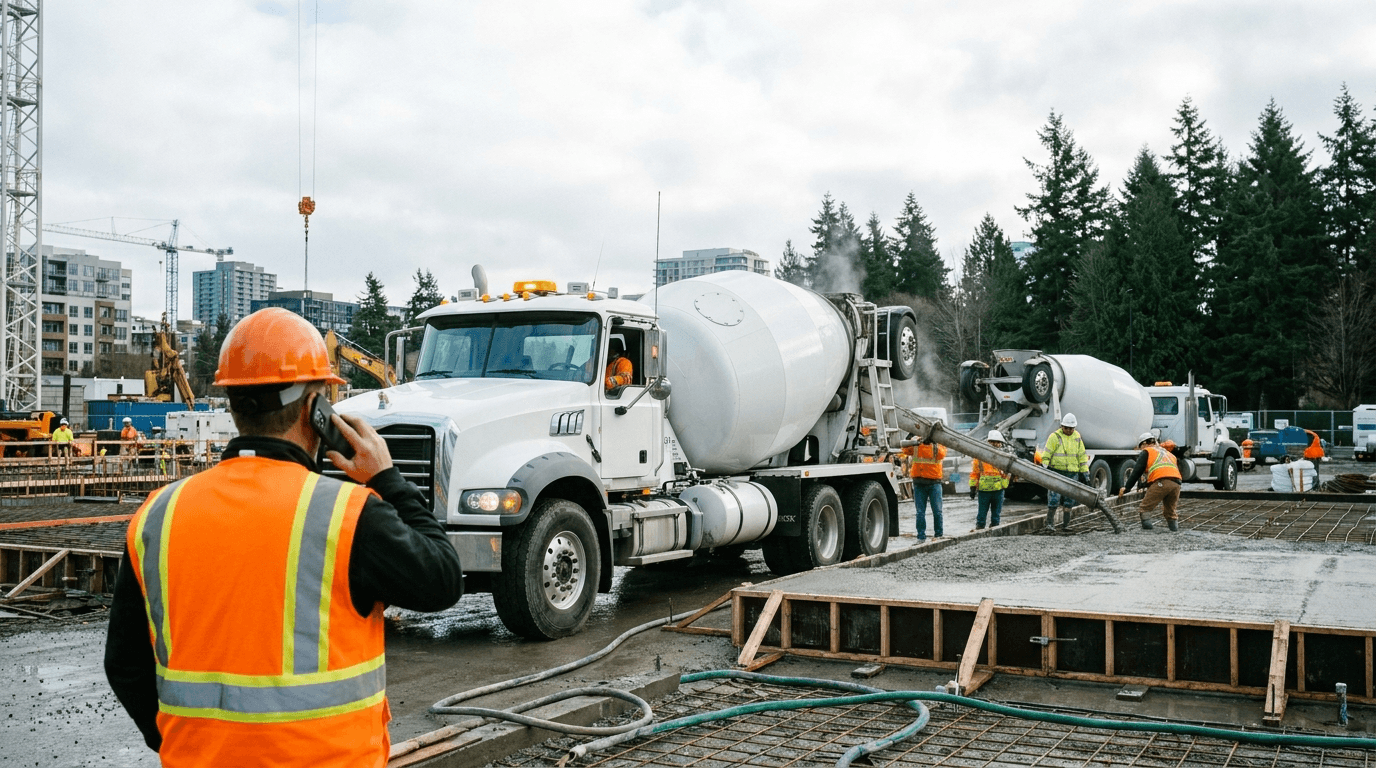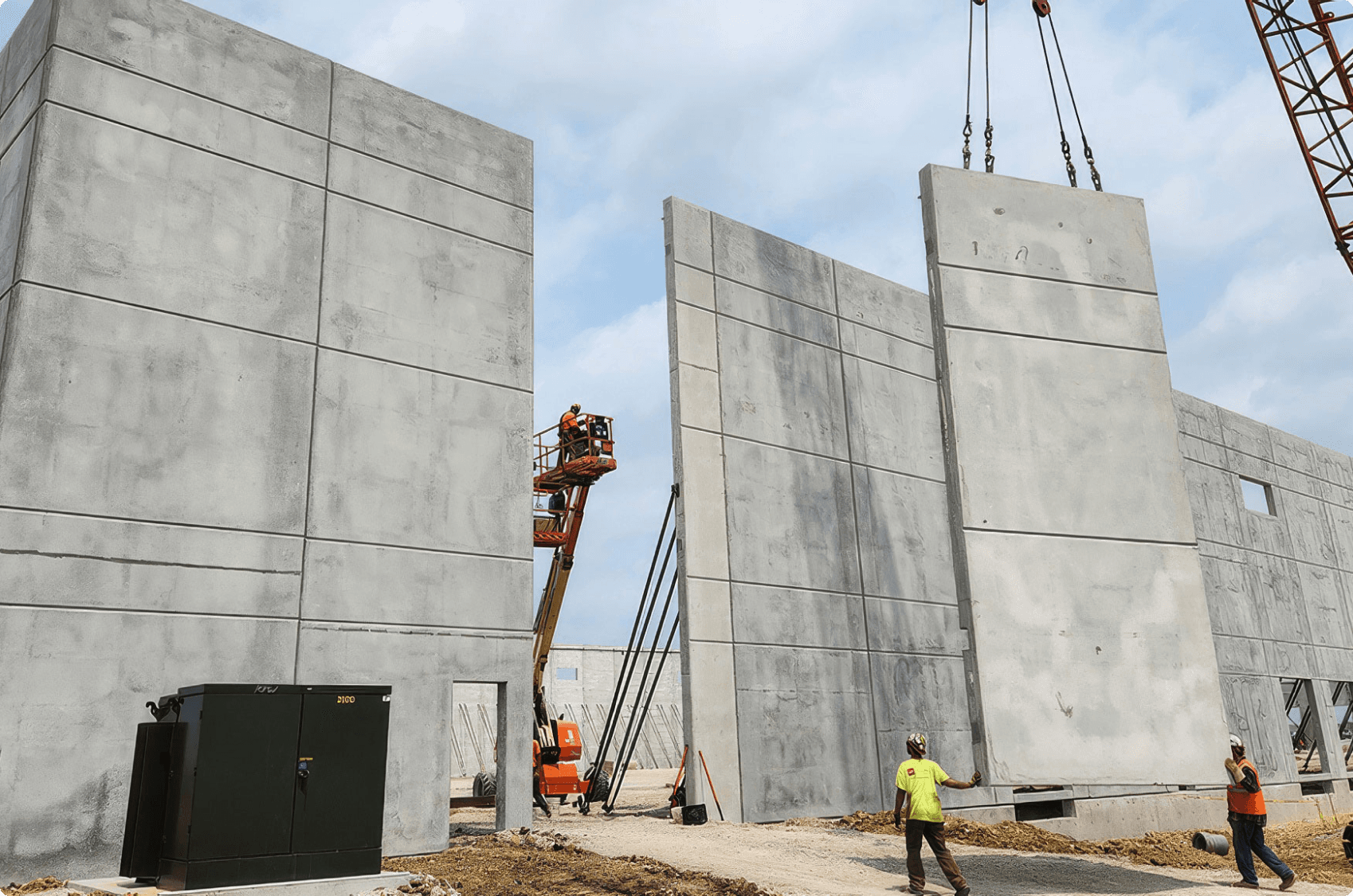
What does AI readiness actually take? For most producers, far less than you’d expect. This is a plain look at the operational data you already generate, what it would take to put it to use, and how to begin, at your pace and without a perfect dataset.
From adoption to advantage
Most producers already have what it takes to begin with AI. The data this initiative needs is generated every day in normal operations, and getting started does not require perfect data or a disruptive project.
The materials industry has already seen what AI can do when given the right data. ML-based mix-design platforms, now in commercial use, learn from large datasets of real production data to flag over-design across a producer’s mix portfolio and to predict compressive strength at the time of batching, bypassing the conventional 28-day wait.3The results are practical and quantifiable: earlier formwork removal, optimized cementitious content, real-time quality alerts before non-compliant concrete reaches placement, and lower embodied carbon. When operated alongside experienced professionals, these models don’t replace material science judgment; they accelerate and sharpen it.
That experience points toward a broader opportunity: applying the same technologies to scheduling and logistics, where there is real room to stay lean, cut avoidable mistakes, and protect margin.
The wider population's adoption of AI
The pace is unlike any technology shift before it, and it is now moving through the construction sector, where the share of firms using AI or planning to invest more in it is rising.
Construction firms' adoption of AI
Like the early movers in cloud infrastructure, producers who develop their data foundations for AI today are building an asset that compounds as AI tools mature around it.
A shift this fast and this important means that getting it right in each operation now matters more than adoption on its own. Whether AI actually pays off comes down, in the majority of cases, to a single factor: data quality. That is encouraging for producers, because most already generate far more usable operational data than they realize, and improving it is well within reach.
Quality in, quality out
LLMs, agents, and ML models have the potential to amplify what they are given. The industry has been well aware of the adage of quality in and quality out in their data for decades, but with AI amplifying whatever it is given, the value of high-quality data is now greater than before. In a 2026 Cloudera survey of IT leaders, data quality was the single most-cited reason AI initiatives have fallen short.2
Your operational data has two halves. One you already run on; the other, until now, was never captured or connected.
Historical challenge: hotspots in structured data quality
- Accounts and contacts: duplicates, stale owners, unclear affiliations, fragmented across CRM and dispatch.
- Mix designs: versions drift between plants, and naming conventions vary by region.
- Plant inventories and materials: codes and quantities are historically difficult to keep reconciled between silo, scale, and ledger, and across plants.
New signal, generated from what you already produce
- Communications analysis: structured annotation of what happened on a call, and why.
- Sentiment and intent: what customers, operations staff, and dispatchers express around events, transactions, and interactions.
- Aggregated patterns: topics, issues, and trends across every communication, comparable across plants, customers, and crews.
- Cleaner records: contacts and accounts reconciled and deduplicated on every interaction.
Over time, as more of your operational data is connected, the same foundation compounds into deeper analysis, such as connecting an incident to the conversation that preceded it, or surfacing earlier signals on the accounts and plants trending toward friction.
Perfect data isn’t the prerequisite
Starting an AI initiative does not require a perfectly prepared dataset. It requires a realistic inventory of what you have and a willingness to begin. This is as much an opportunity to evaluate your data infrastructure with help from MaterialMotion as it is to derive value from it.
The minimal technical requirement for daily connectivity: cloud and API accessibility to your data.
Additionally, there are advantages to running AI initiatives with more than one vendor, even simultaneously, provided those vendors move carefully and methodically and can support your initiatives in quick, iterative cycles. Multiple approaches from focused vendors can cross-pollinate advantages. The industry’s substantial investment in cloud infrastructure over the last decade creates real ROI potential from choosing the strongest system for each problem, then comparing how tools and models perform in your own operations.
Self-healing data
An advantage of beginning to analyze scheduling, logistics, and communications data with AI is that the same analysis can be used to assess data quality risk and, in some cases, begin self-healing the data as a byproduct of normal operations.
Clean data pays off directly here. An accurate picture of a person in your customer base, what they care about, how loyal they are, and the strength of their relationship with your team, is the foundation for aligning sales and dispatch around the customer rather than around the order.
Data integration
MaterialMotion integrates with data most materials producers already generate in the course of daily operations. No new data collection infrastructure is required. Your starting place is data you already have today, and it falls into three categories.
| # | Category | Examples | Integrates with |
|---|---|---|---|
| 01 | Communications: the starting point | Calls · Customer messages · Dispatch messages · Fleet communications | VOIP / Phones · Email · Customer portals & messaging · Driver messaging & radio |
| 02 | Transactions: the fuller picture | Orders & tickets · Schedules (mixes, quantities, spacing, admixtures) · Delivery notes | Direct import · Cloud dispatch systems |
| 03 | Records: dimensional context | Customers, plants, projects · Products, mixes · Drivers, trucks | Direct import · Cloud dispatch systems · ERP · BI |
You can start today with call recordings, text chat, and dispatch data, which is enough to demonstrate the value of the Operational Intelligence system quickly. Even basic information from call recordings alone surfaces patterns across your operations that weren’t previously available to the industry, and those insights connect and filter across every layer of your operation:
- The commercial layer: by order, project, or customer
- The operational layer: by truck, plant, plant group, or region
- The materials layer: by material, mix, or product code
- The workforce layer: by team or team member, such as dispatchers, drivers, and salespeople
As more of your dispatch data is connected, the dimensionality and accuracy of the insights grow with it. Running on your real operational data also reveals something useful in itself: where your data is strong, where it has gaps, and what that means for your AI readiness going forward.

Getting started
MaterialMotion welcomes a consultative discussion about your data and how ready you may be to gain insights through a pilot or wider implementation. Regardless of where you are today, the AI transition, like the move to cloud, will take time, organizational adjustment, and a methodical approach. The producers who start building their data foundation now will be the ones best positioned as AI tools mature around it.
A few questions to orient that conversation:
- Where would you categorize your AI data readiness today: not started, early, or advanced?
- Do you have a cloud dispatch system and some stored communications data?
- Are you interested in seeing what insights we can generate?